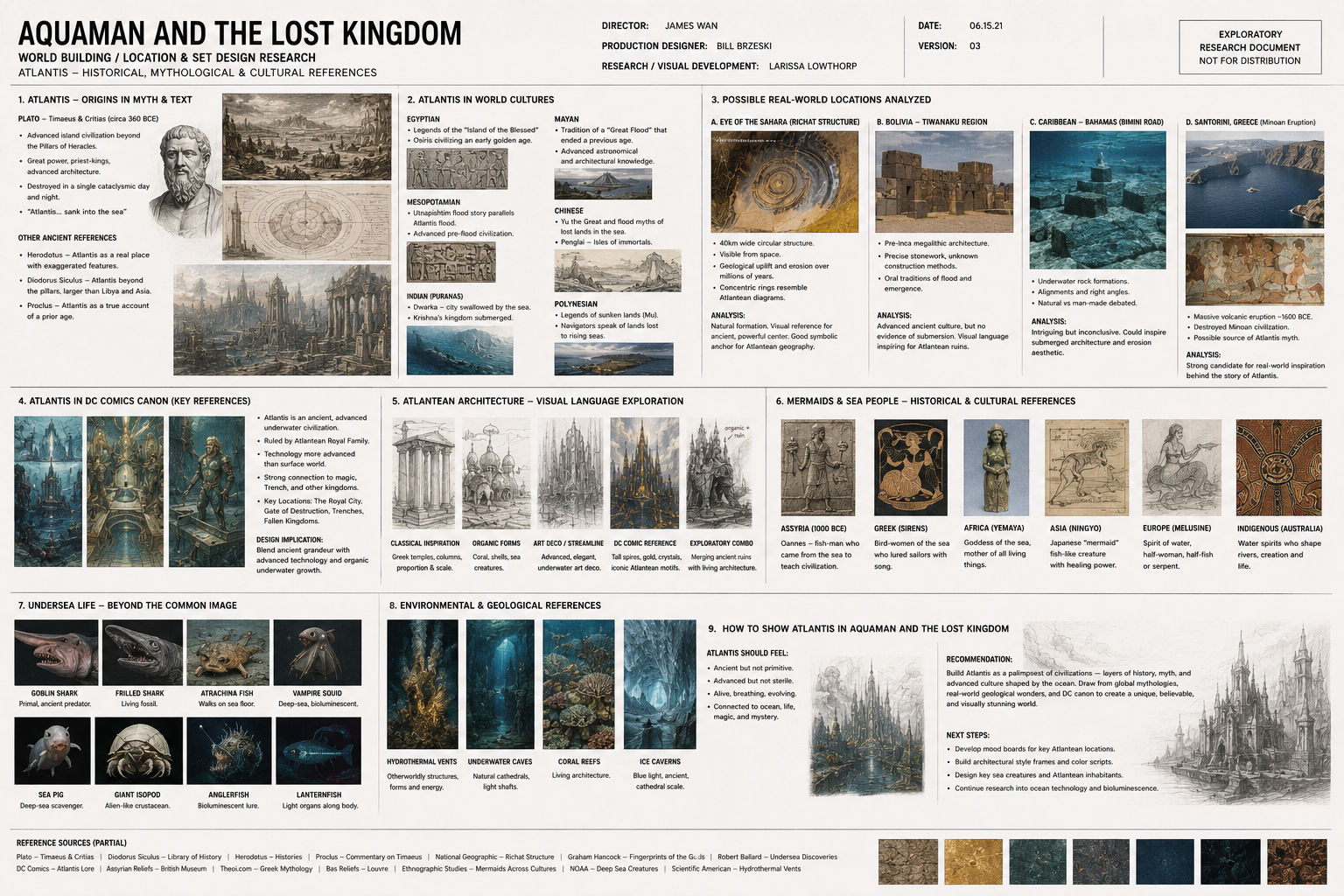
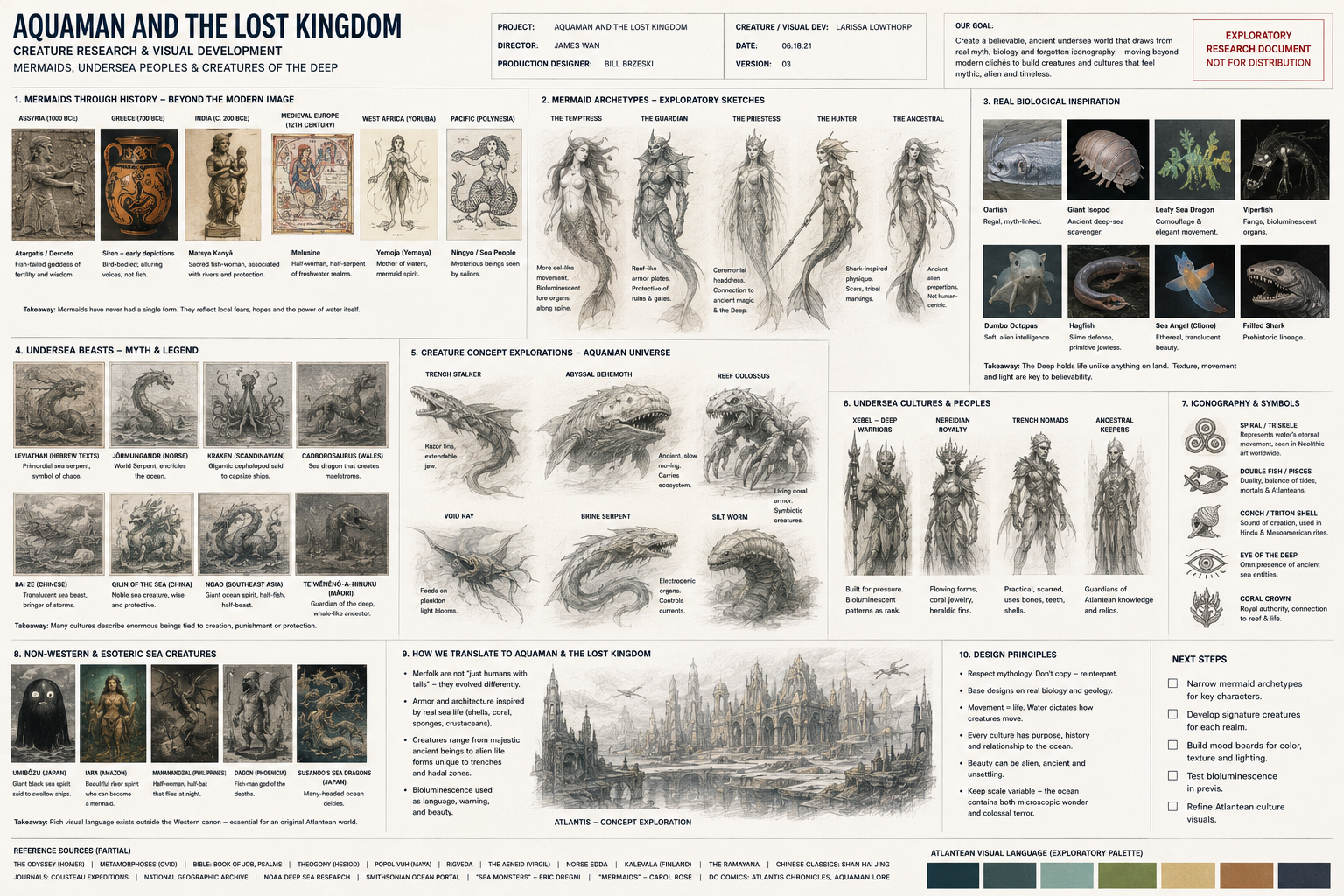
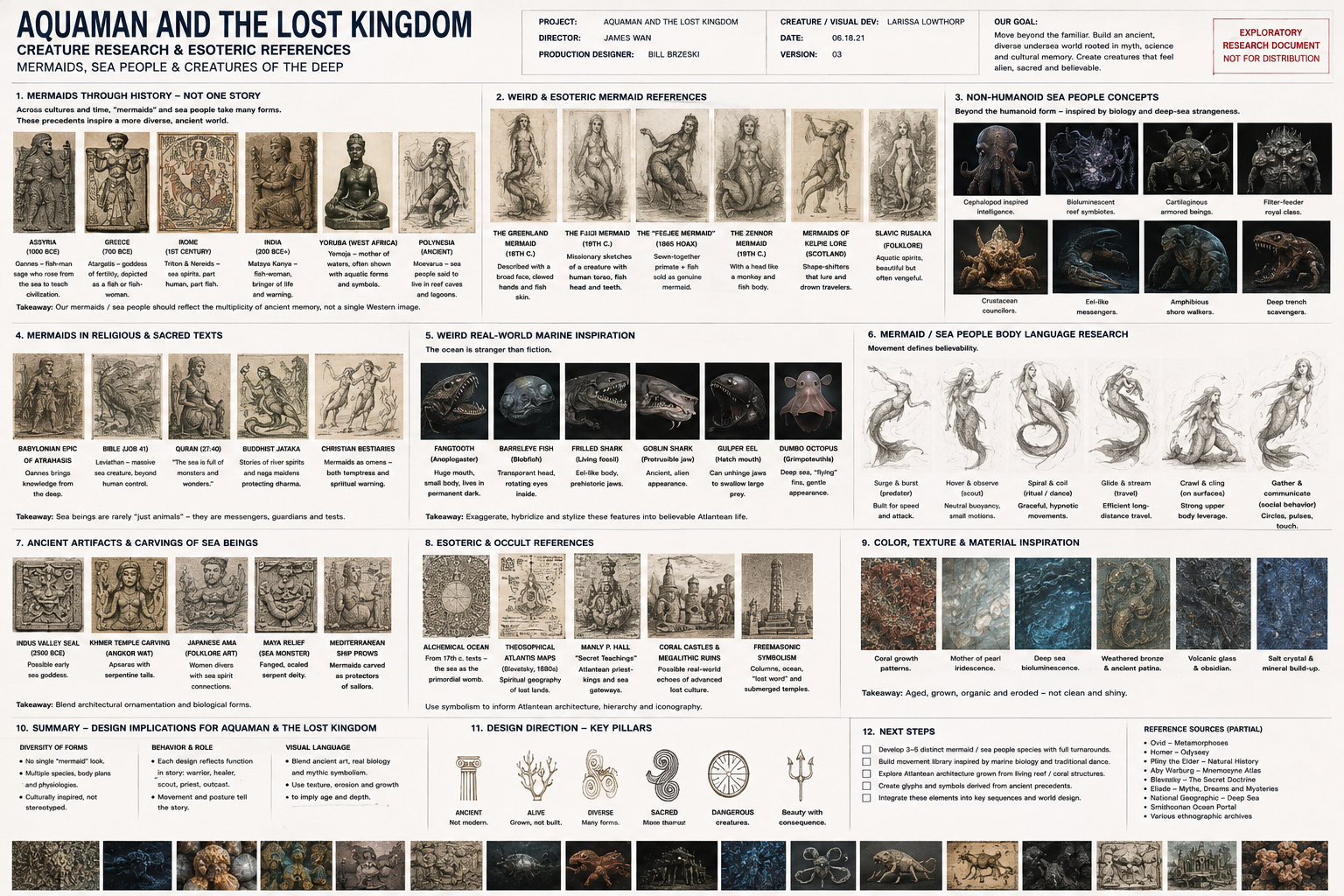
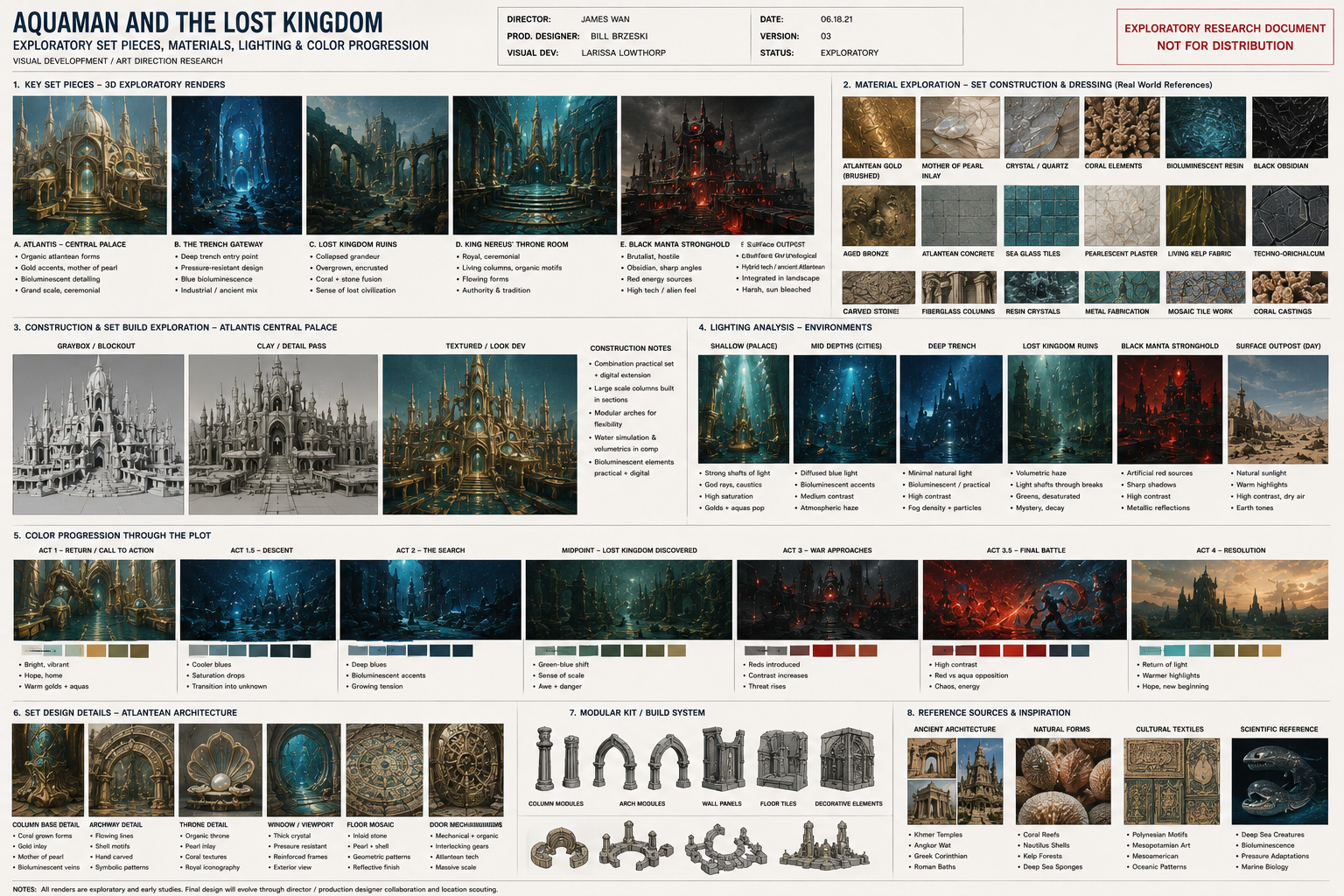
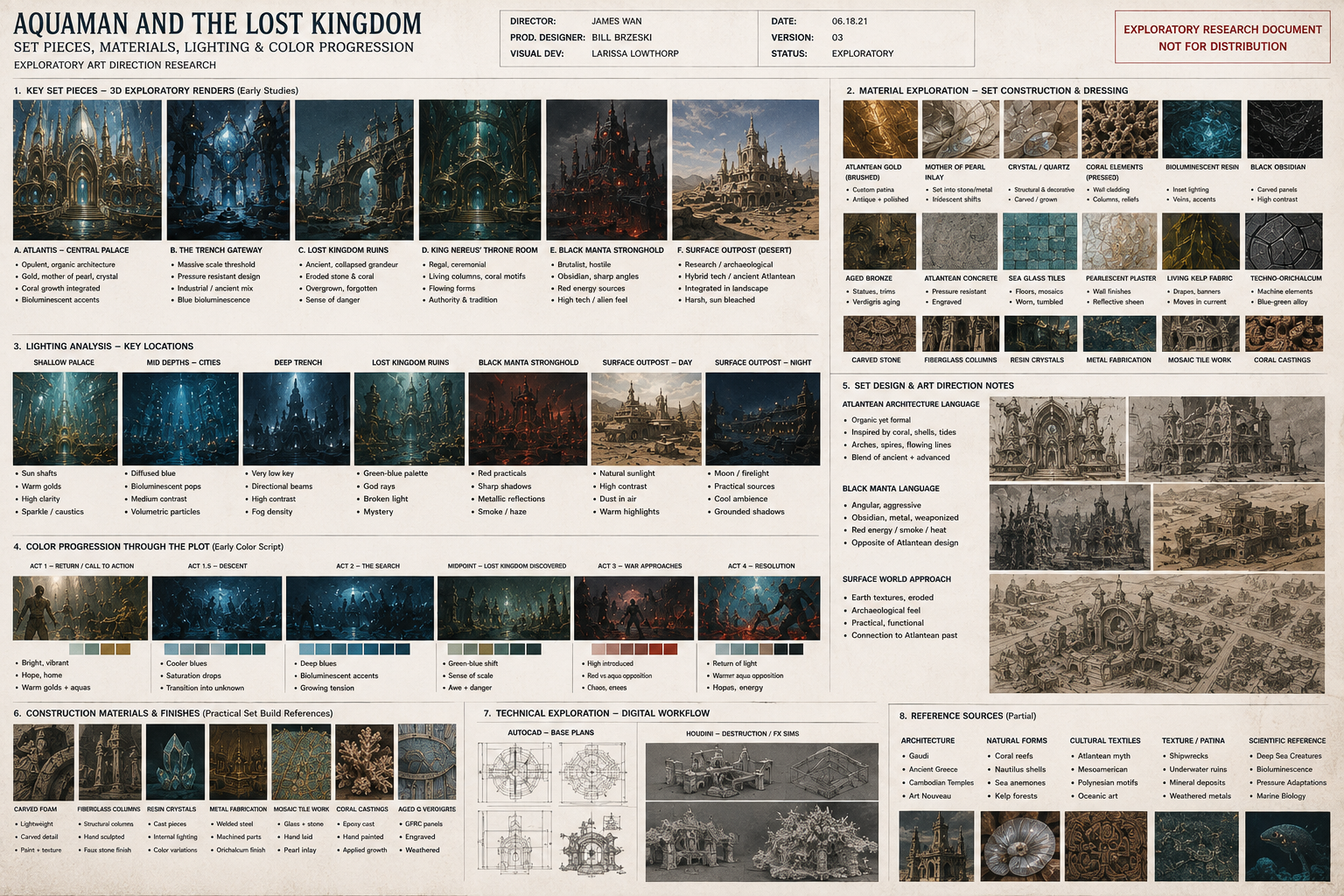
The second Aquaman arrived with an established Atlantis, then substantially widened the map. New environments, civilizations, creatures and technologies created a larger body of material to organize, while Arthur’s changed circumstances shifted the emotional center of the property. Concept development used that expansion to define distinct territories within the world. Kingdoms and environments could carry their own social and material logic; creatures and technology could reveal how different parts of Atlantis functioned; and character relationships provided a human route through the spectacle.
Our visual treatments and visual language guides brought those strands together so scale remained connected to story. Arthur and Orm created a particularly useful axis for creative decisions. Their history, rivalry and forced proximity allowed familiar franchise material to be seen through a changed relationship. Character concepts explored that tension alongside the larger mythology, with humor and conflict used to keep the brothers present inside a story filled with enormous environments and action.
Creative review concentrated on clarity across that density. Character motivation, world rules, terminology, visual cues and continuity all affected whether an audience could follow the story without losing the scale that defines Aquaman. The contribution helped turn an expanding mythology into material that remained legible, character-led and coherent.