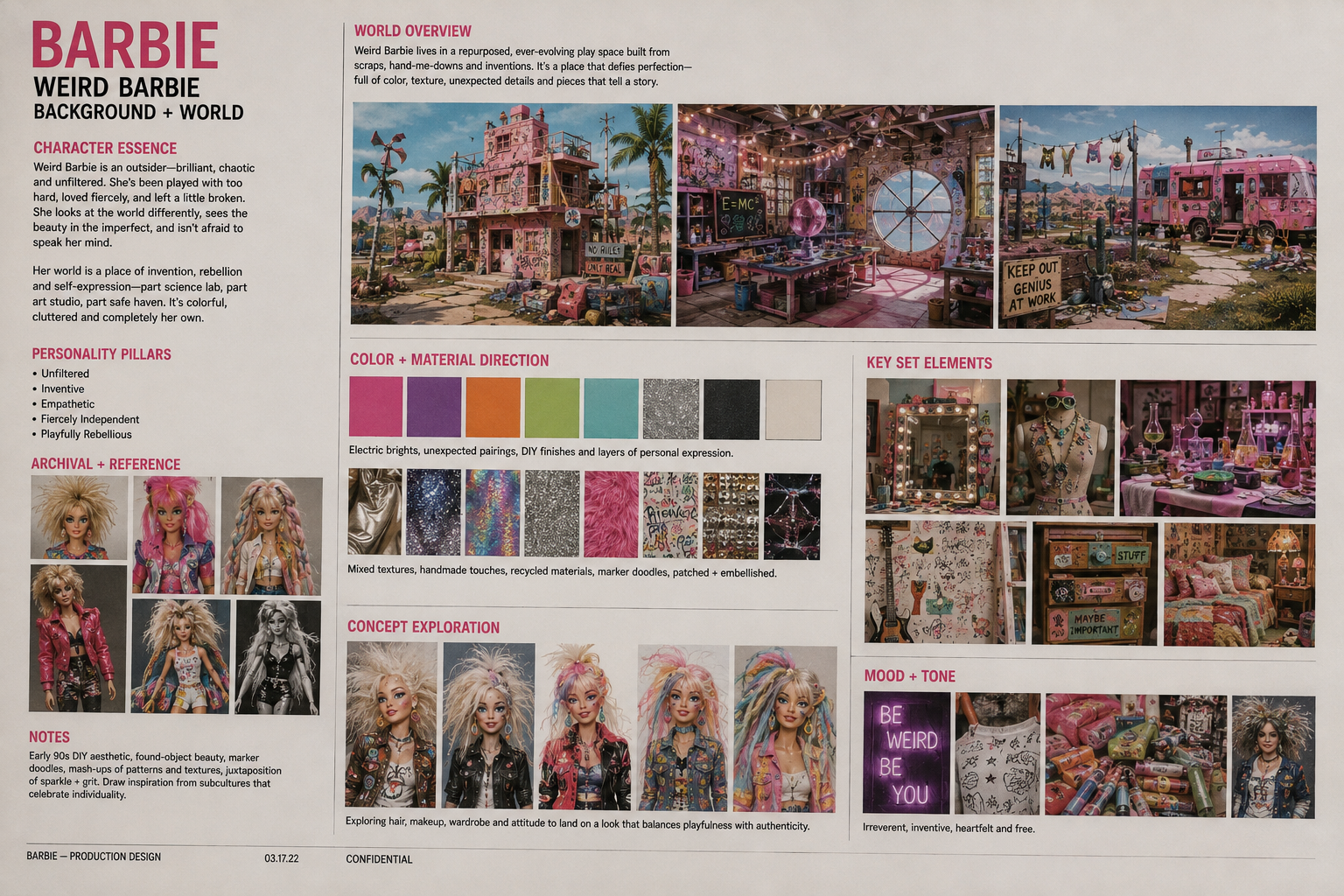
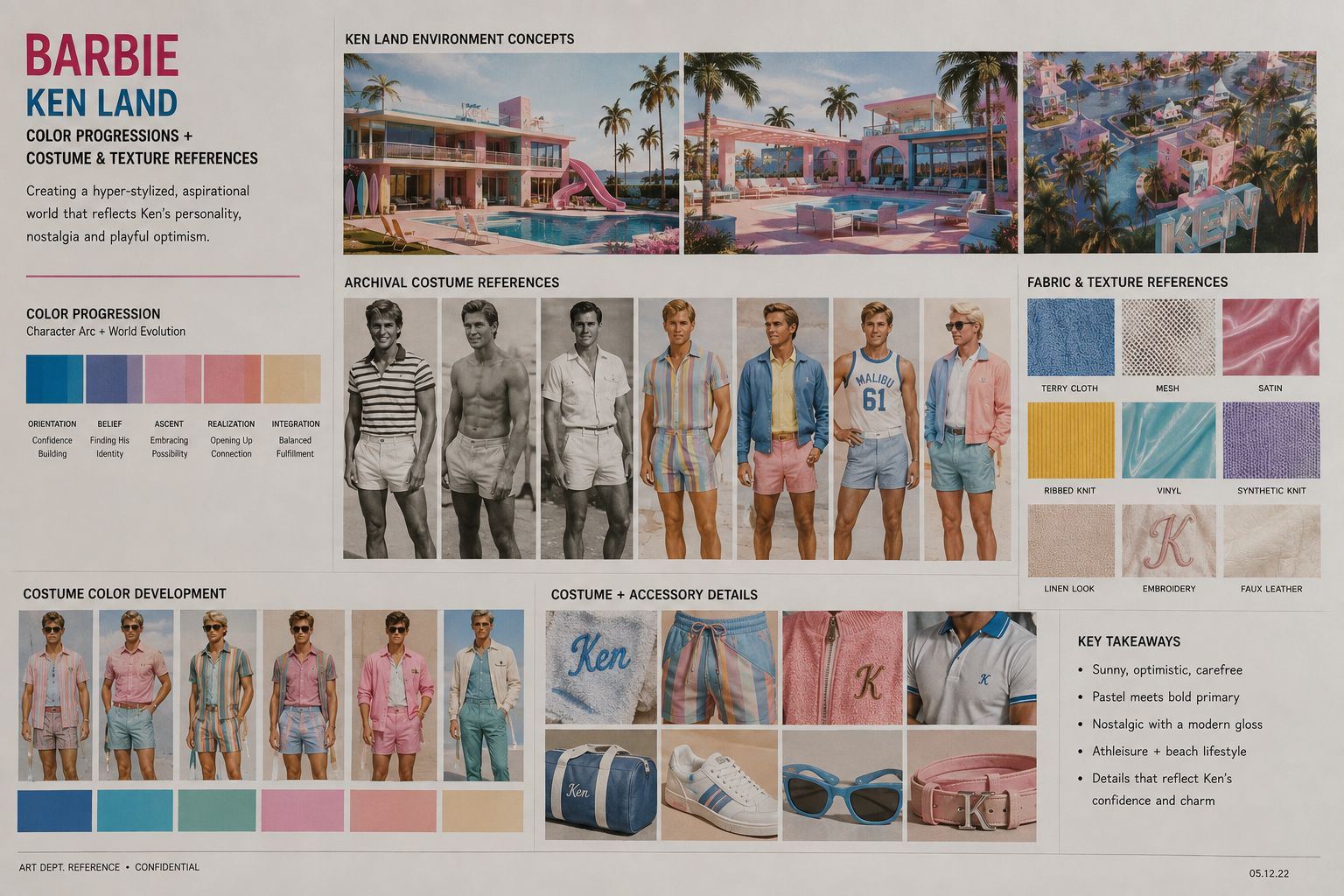
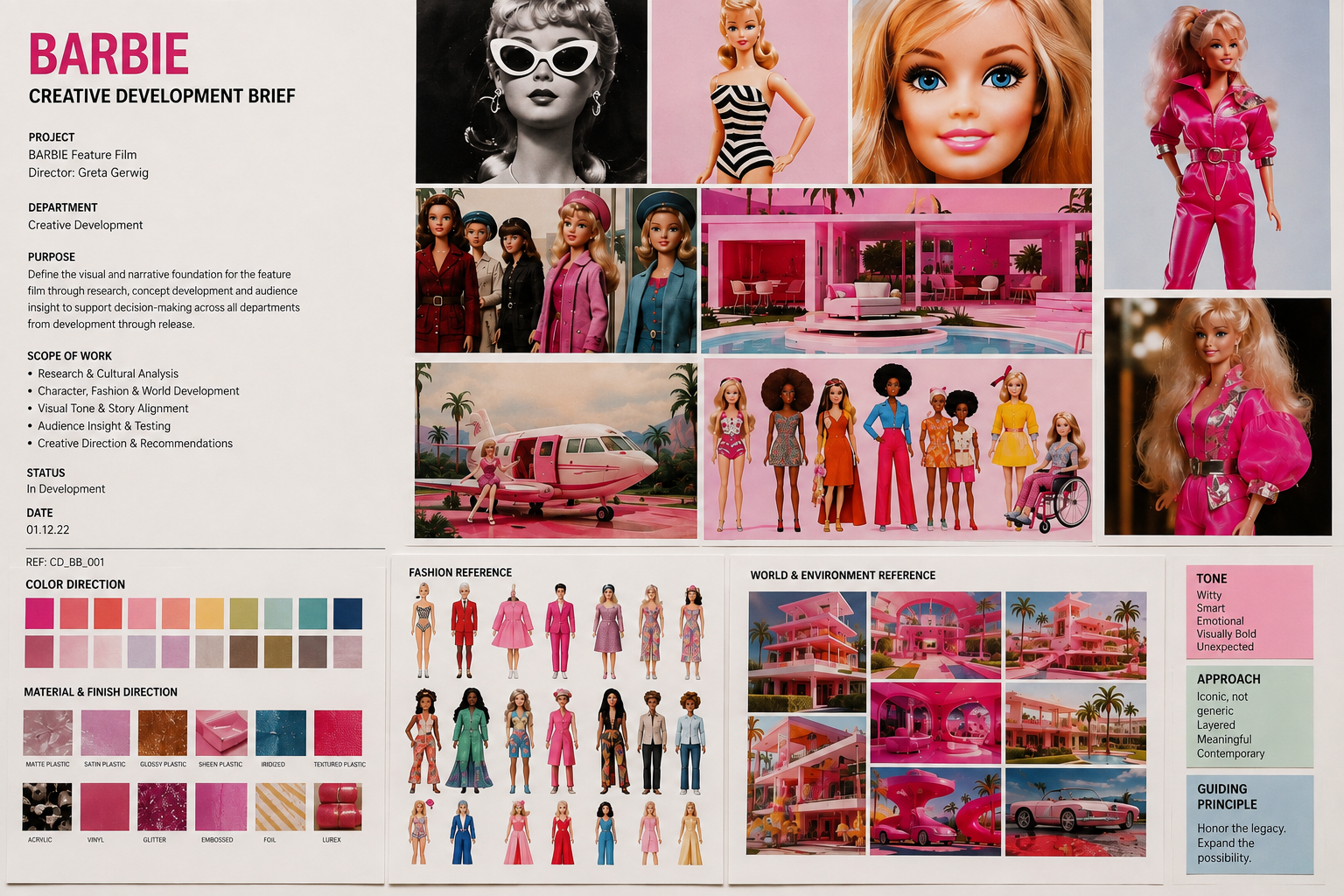
We started inside the archive. Our research traced Barbie across six decades of dolls, packaging, advertising, fashion, careers, characters, environments and cultural shifts, alongside the very different relationships generations of audiences had formed with her. We catalogued recurring visual codes and lesser-known pieces of brand history, then separated references that carried personal and cultural meaning from those that had become shorthand for “Barbie.”
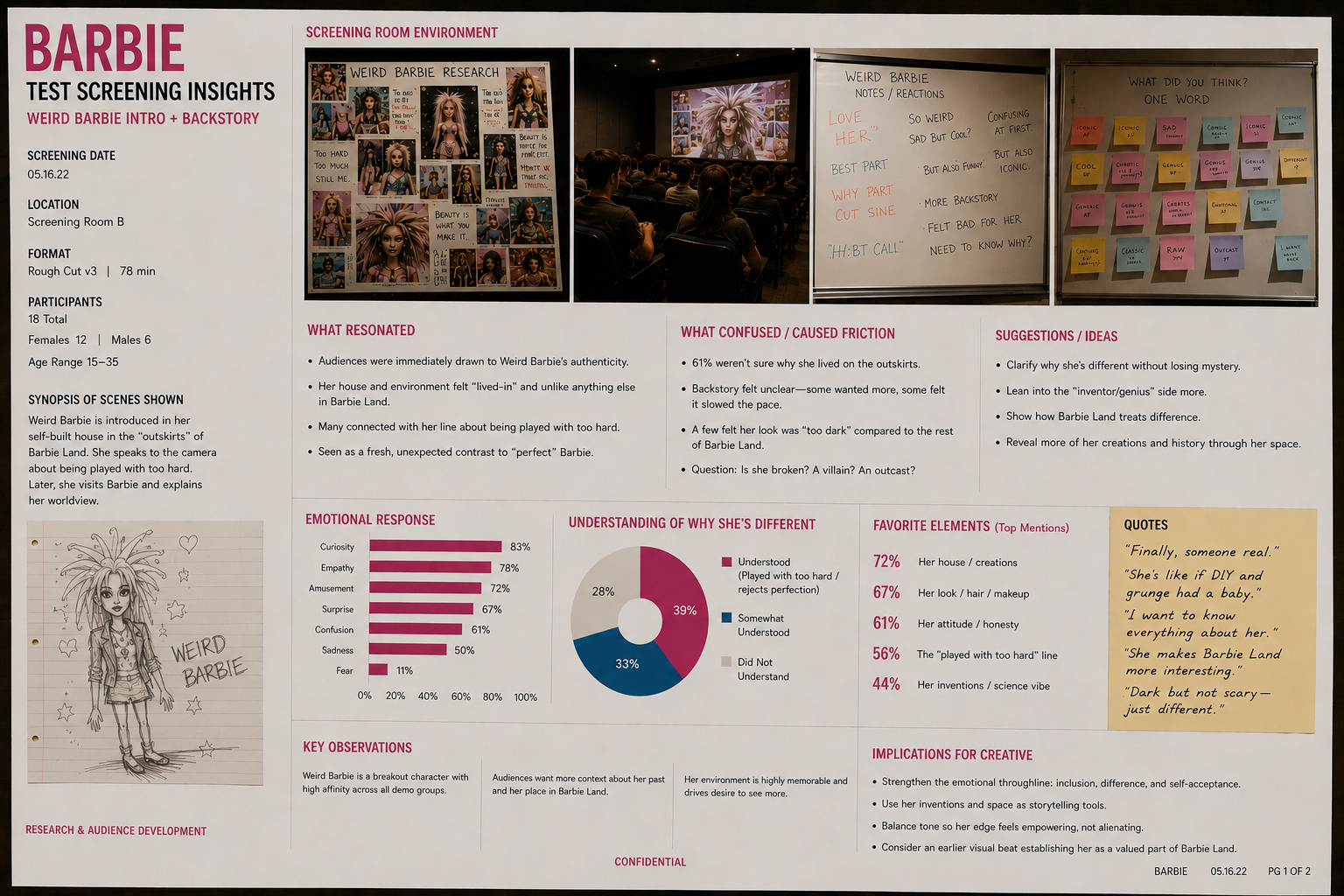
Audience research and test sessions added another layer, revealing which details triggered recognition, nostalgia, humor or curiosity and where familiarity with the brand created expectations the film could productively challenge.That intelligence became detailed creative briefs, treatments, storyboards, reference decks and concept territories for studio review. Fashion received its own research track, down to silhouette, garment cut, fabrication, prints, accessories, hair and styling appropriate to the period being referenced.
We sifted through legacy assets and current creative, evaluated concepts against the film’s tone and developed ideas around characters, fashion, locations, objects and moments that audiences could engage with outside the narrative itself. Potential collaborators and agencies were researched, interviewed and vetted against the same criteria, with recommendations and creative direction prepared for leadership.
The scale of the release created a second problem: once dozens of expressions of the property existed simultaneously, small inconsistencies became highly visible. Through post-production and release preparation, we reviewed creative for character logic, historical and fashion accuracy, continuity, cultural context, visual hierarchy, tone and errors.
Frequent, early feedback helped us identify where an idea needed additional context, where audiences immediately understood the reference and where explanation weakened something that already worked. We provided a meticulously-researched creative blueprint capable of generating distinct ideas from the actual depth of the Barbie property. That provided us with far far more territory than the obvious visual signatures of the brand and helped support a release that audiences could discover, decode, discuss and participate in from multiple points of entry.