The theatrical release of Elvis was one moment in a much larger commercial cycle. Elvis connected a contemporary film audience with an artist whose music, image, fashion and cultural legacy already supported decades of consumer recognition.
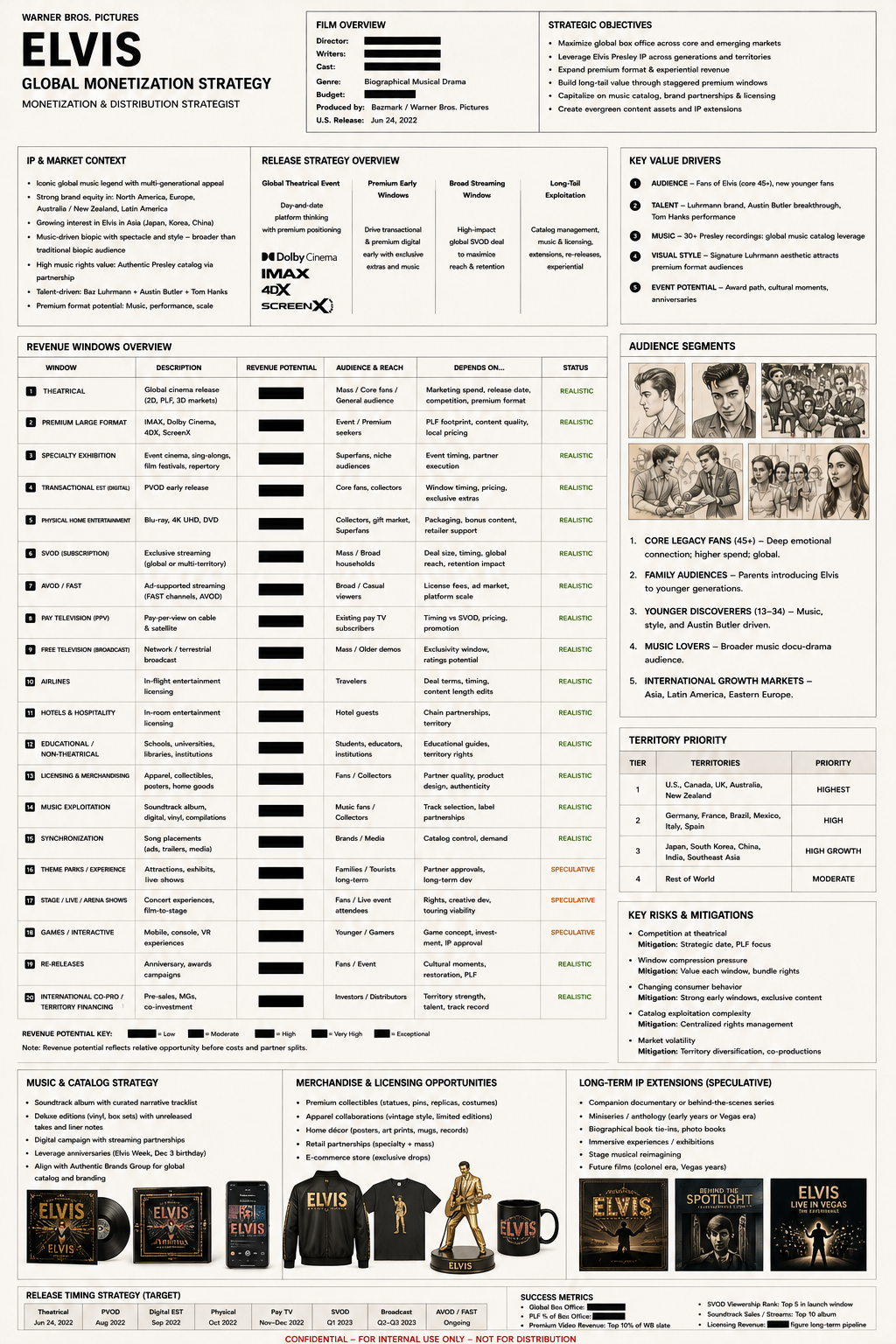
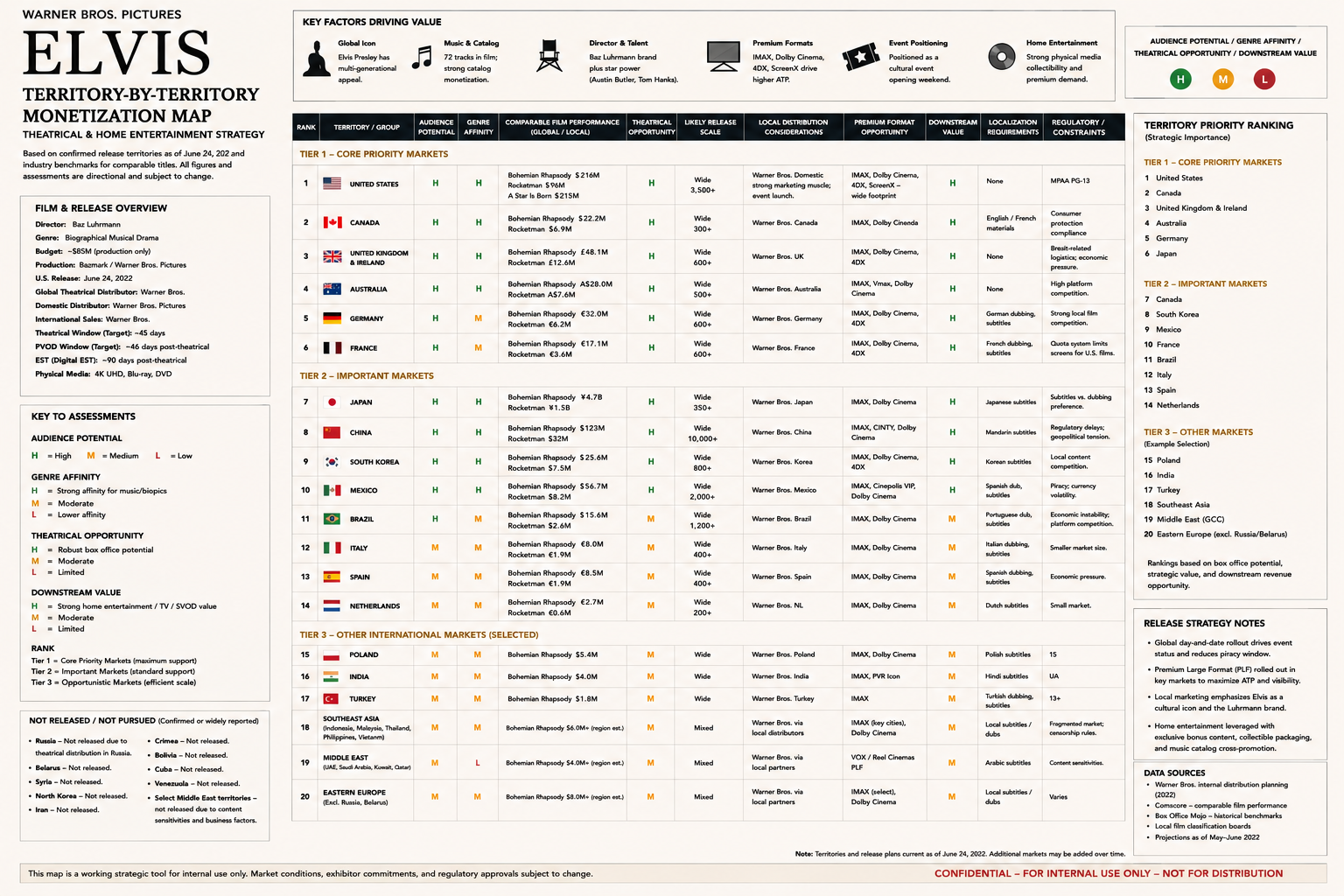
Planning began with that unusual combination of new demand and established value. Commercial analysis looked across the release lifecycle to identify where audience attention could travel next. Distribution windows, licensing, consumer products, partnerships and other Warner Bros. businesses were considered as connected opportunities, with timing and audience behavior central to the model. The objective was to capture value as interest moved from theatrical discovery into music, ownership, collecting and repeat engagement.
Our strategy also distinguished between audiences. Existing Elvis fans, younger viewers introduced through Austin Butler, music audiences and consumers drawn to the film’s fashion and cultural moment did not present the same opportunity.
Different entry points created different commercial paths, which allowed revenue planning to extend beyond a single generalized film audience. That approach contributed to a broader cross-portfolio monetization model that created seven new revenue streams and helped drive a 22% increase in Consumer Products gross revenue YoY for this franchise vertical.